
Arrest Warrants in Prince Edward County
Virginia Code §19.2-72 sets the bar for every arrest warrant in Prince Edward County. A complainant swears to the facts under oath, and a magistrate or judge must find probable cause before any process issues. No public search tool makes that call; the reviewing judicial officer does. The local District 10 magistrate office handles arrest warrants, summonses, search warrants, extradition warrants, and bail hearings. The public OCIS layer won't list every new warrant, so ask the issuing office about a specific case.
Prince Edward County Probable-Cause Review
The process starts when a complainant or officer brings information to a magistrate or judge. Under the DC-311 criminal complaint instructions, the sworn complaint may be prepared by the complainant, the magistrate, or the court. The judicial officer weighs that complaint and any testimony against the probable-cause standard. If the warrant issues, it names the accused, describes the offense, commands an arrest, and bears the issuing authority's signature. It may be directed to a sheriff, deputy, or police officer authorized to execute it. A summons takes a different path, directing an appearance without an arrest command. Fresh process may lag in OCIS, and the Prince Edward magistrate office at 111 N. South Street stays open 24/7 for process and bail functions.
What a Prince Edward County Arrest Warrant Contains
Virginia's statute fixes what an arrest warrant must contain. A public court result in Prince Edward County may show related case fields, but it is not necessarily the warrant itself. Bring the case number to the issuing office and request the record it can lawfully provide.
| Case number | Example: CR12345678-90 OCIS help format example, not a confirmed local warrant number. |
|---|---|
| Accused | The person named in the process; compare the court and charge before assuming a match. |
| Offense | Description of the alleged offense and related code section when recorded. |
| Issuing authority | Magistrate or judge whose signature and direction appear on the warrant. |
| Command | Arrest and bring the accused before a court, as stated by §19.2-72. |
| Related case fields | Hearing, disposition, and service details may appear in OCIS case information. |
Prince Edward County DC-311 Complaint
The DC-311 is a criminal complaint form, not a warrant lookup. Its instructions say the complaint is sworn and may attach to felony or misdemeanor warrant or summons forms in Prince Edward County. It documents the allegation for review. It does not show whether process was issued or served.
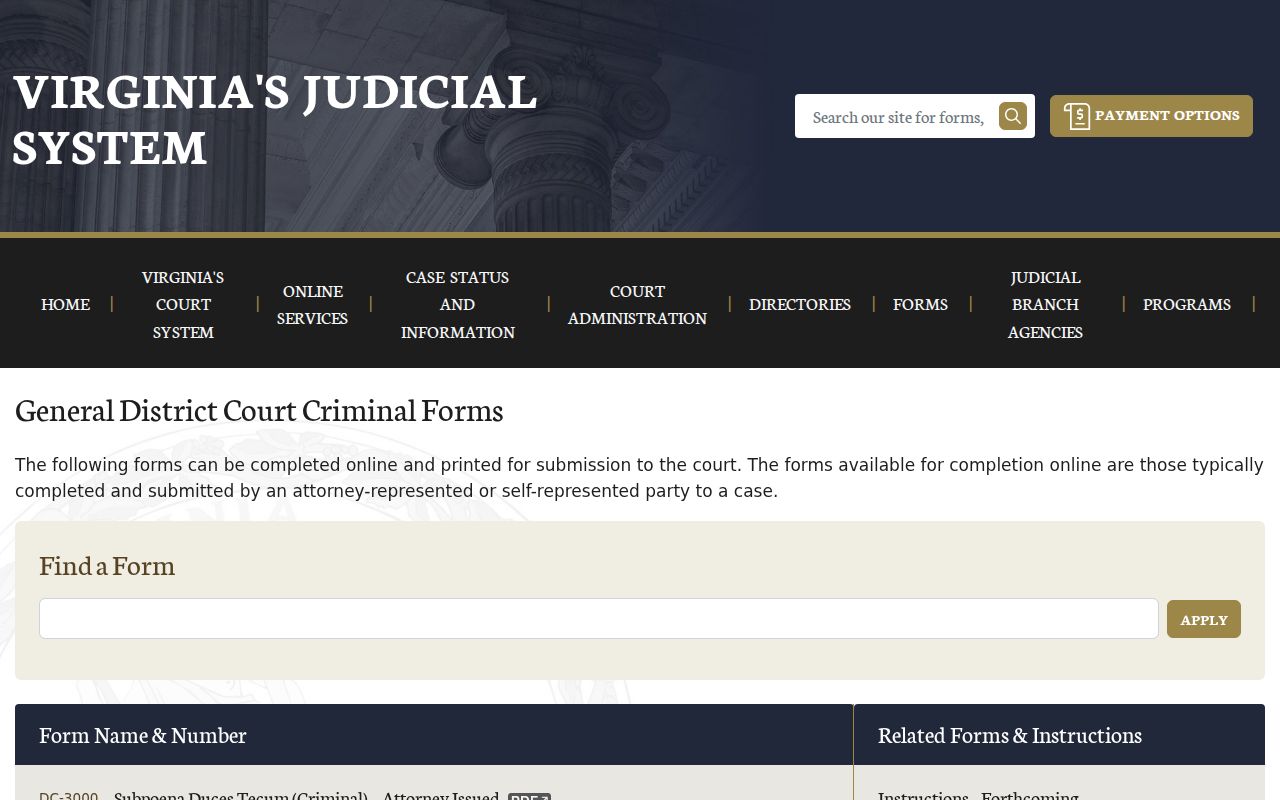
The forms index groups complaint, surety, and other criminal process forms. Rely on the official instructions to identify the form rather than an unlabeled copy. An affidavit or complaint proves nothing about service or recall status. That question goes to the issuing court in Prince Edward County.
How Prince Edward County Arrest Warrants Are Served
The Prince Edward County Sheriff's Office is the countywide contact for serving warrants, and Farmville Police handles matters inside town limits and on town-owned property. Virginia Code §19.2-72 covers execution by authorized officers anywhere in the Commonwealth. The court or magistrate creates the process; the serving agency carries it out. Once an arrest happens, custody and court status become separate questions. Piedmont Regional Jail can tell you whether someone is held there, while the issuing court or magistrate confirms the warrant, charge, hearing, and release process. The Sheriff's Activity Report may log a "SERVING WARRANT" event, but that label proves no outcome and is no complete warrant roster.
Prince Edward County Service Roles
Call the Sheriff's Office at (434) 392-8101 for county service questions. Farmville Police sits at 116 N. Main Street, lists (434) 392-9259 for its office, and routes emergencies through (434) 392-3332. Each agency answers within its own role. Neither one replaces the issuing clerk on a recall decision. The county Activity Report is just an event log, and a warrant-related label there says nothing about who was served, whether the order was returned, or whether the court later withdrew it. For the official record and status in Prince Edward County, ask the court.
Arrest Warrant vs Summons vs Bench Warrant
These process types do different jobs. An arrest warrant commands arrest; a summons directs an appearance; a bench warrant or capias usually follows a missed court obligation in an existing case. The file and the charge set the right response. For the missed-appearance route, see Prince Edward County bench warrants.
| Feature | Arrest Warrant | Summons | Bench Warrant |
|---|---|---|---|
| What it orders | Arrest and presentation before court | Appearance at the stated time and place | Arrest process linked to an existing obligation |
| Basis | Sworn complaint and probable cause | Appearance process under the applicable rule | Missed appearance or court-order issue |
| Who issues it | Magistrate or judge | Authorized court or officer | Issuing court authority |
| Next step | Confirm status and get legal advice | Attend as directed | Ask the issuing court about appearance or recall |
Prince Edward County Jail Records
Piedmont Regional Jail serves Prince Edward and five neighboring counties. Its offender lookup is a custody-location tool, not an arrest-warrant search. Someone missing from the jail result may still have open process, and a custody entry alone does not explain the issuing court's order.

The regional facility covers several localities, so it can answer custody routing after a booking. For the warrant or the court case, go back to the issuing office in Prince Edward County.
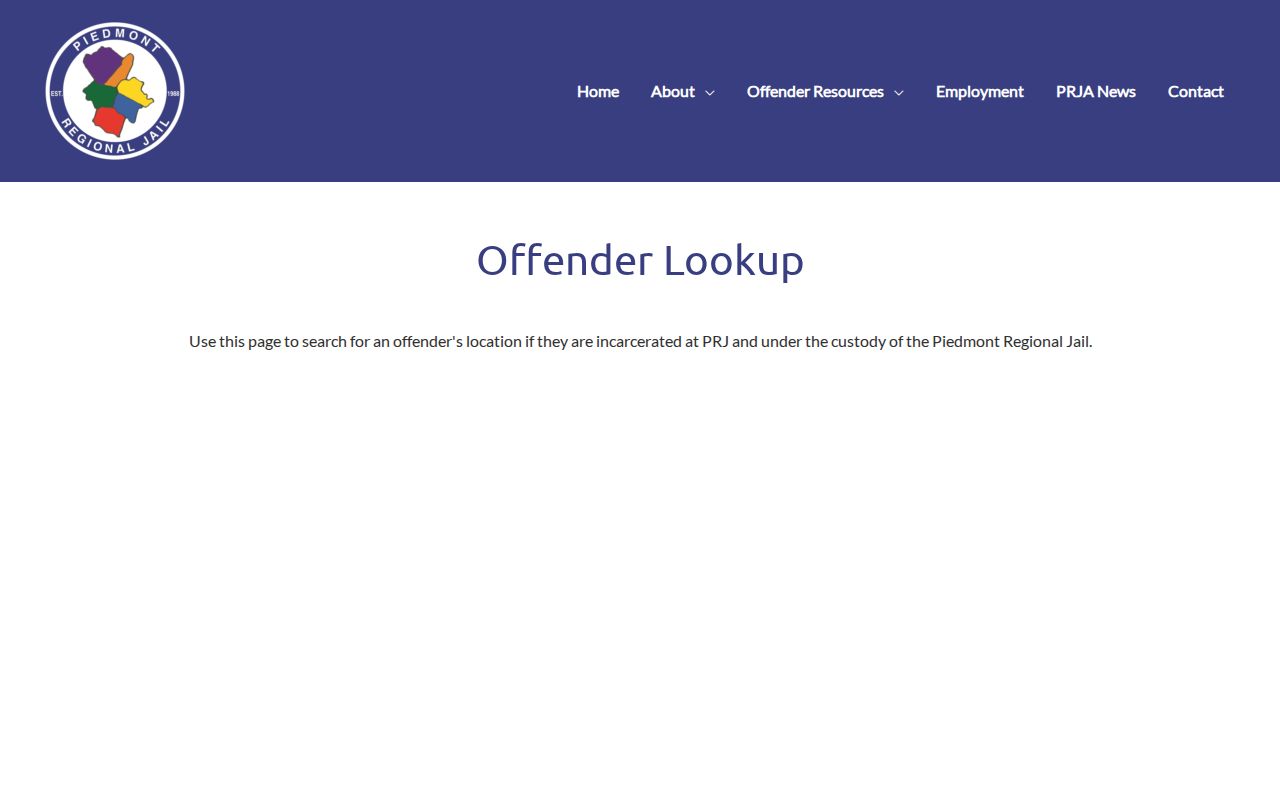
The lookup frame covers custody only. It shows no countywide roster, and it clears no court process in Prince Edward County.

Use the jail contact page for custody and records routing, then ask the Prince Edward County court about bond or process.
What to Do If There's a Warrant for You
Start by calling the court or magistrate that issued the warrant, not a website. Ask whether the process is still active and what it requires of you. Prince Edward County does not publish one fixed bond amount or a single walk-in procedure for the whole county, so the answer depends on the case. If an arrest seems likely, it is worth talking with a Virginia lawyer before you decide how to appear or surrender. A public case row online can lag behind reality, too. A newly issued warrant, or one a judge has restricted, may simply not appear there yet, so treat a blank result as a starting point rather than a final answer. Once you reach the court, ask what steps are on the table. A voluntary appearance, posting bond, or a motion to recall or quash the warrant are all legal steps the judge can consider, not buttons you press online. You should also confirm where the person reports, whether that is the magistrate, the court, the Sheriff, or the jail, and which documents to bring along.
Important: Confirm an arrest notice with the issuing office and consider counsel before appearing; no online case result can arrange a recall or bond.
Prince Edward County Federal Warrants
Federal warrants do not run through the same channels as Virginia OCIS, the Prince Edward Sheriff, or the local magistrates. Prince Edward County sits in the Richmond Division of the U.S. District Court for the Eastern District of Virginia. For federal case filings, use the federal court and PACER. A Virginia county case search cannot confirm federal warrant status for Prince Edward County.
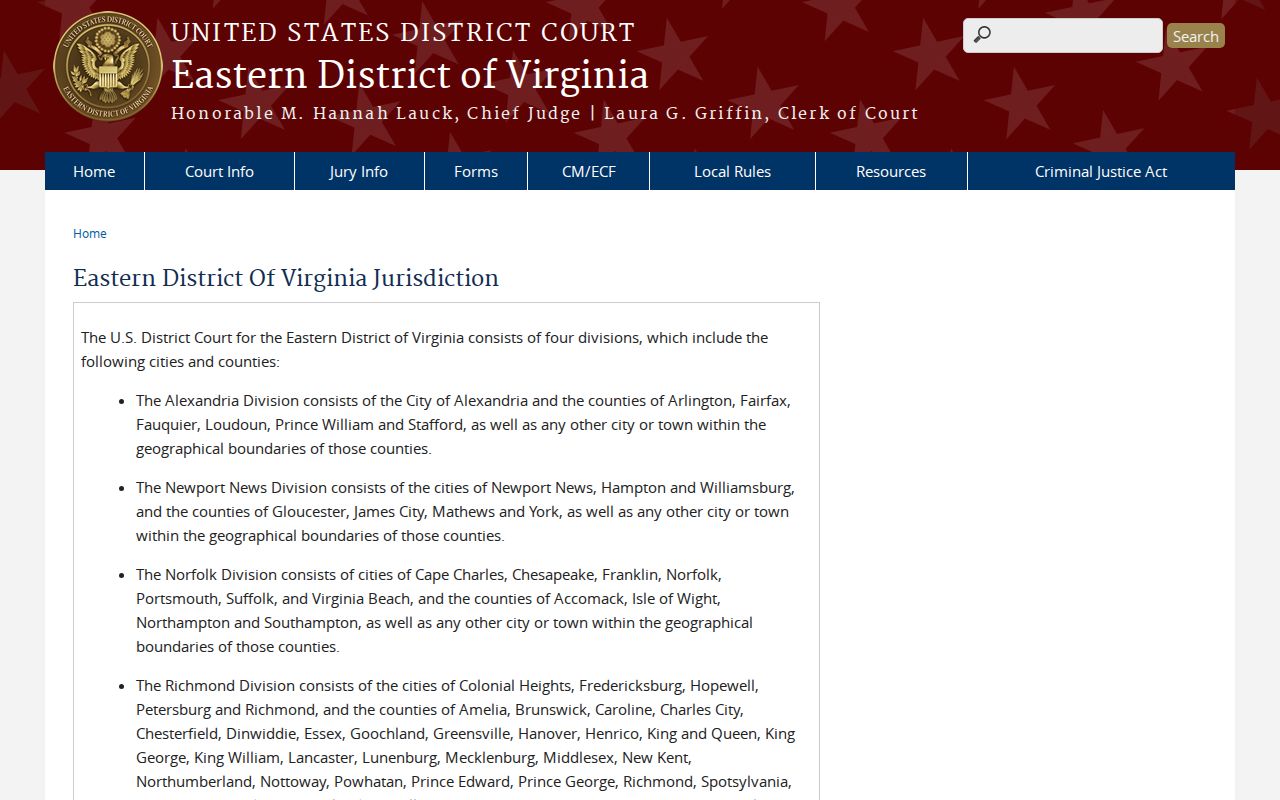
The court's jurisdiction page shows the Richmond Division route for Prince Edward County cases. The federal docket stays a separate record system.
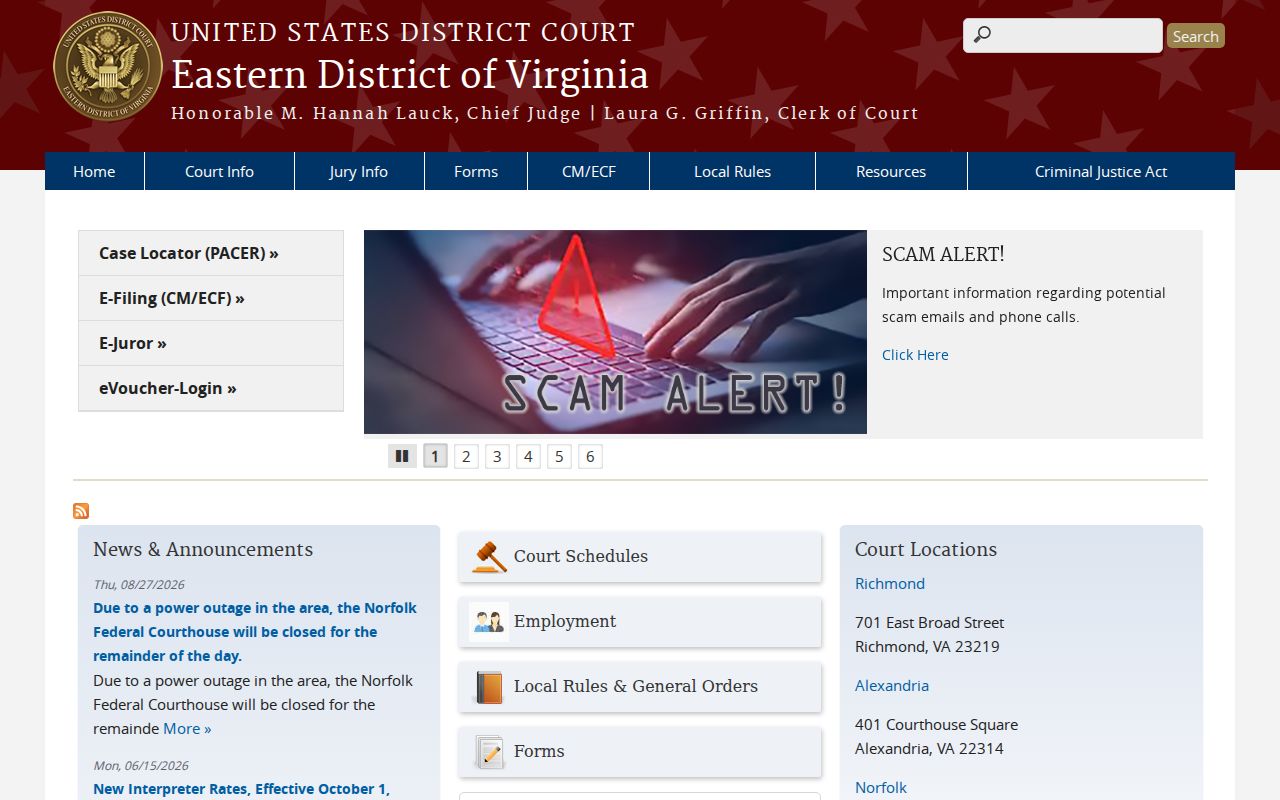
Use the official district court navigation to identify federal filing information.

PACER is the way into the federal docket for Prince Edward County. It is not a public statewide warrant list.